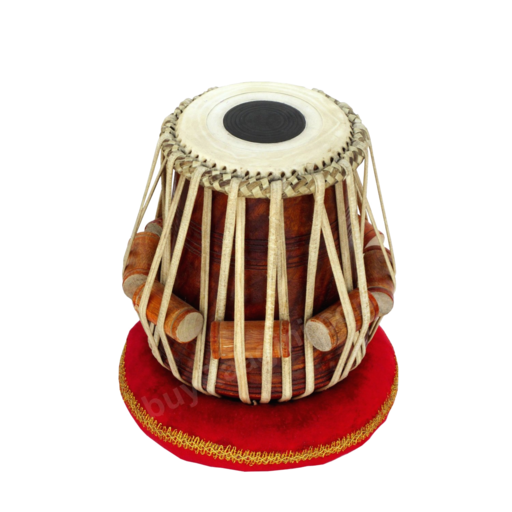
Yesterday I made up this little Kaida in tintal and posted it on this blog and Facebook.
dhatiga trekre dhete gena dhatiga dhinagena
trekre dhetete gena dhatiga trekre thinakena
(spaces indicate phrasing)
On Facebook, Thomas Deneuville, founder and editor of the wonderful online music magazine I Care If You Listen, asked a simple question:
Do kaidas always have to rhyme?
The short answer is no. The type of thing that I shared doesn’t have to have lines that end with a rhyme.
There are two longer answers.
One way Kaidas rhyme has to do with a structure and device that is common in most types of tabla compositions – and many other types of compositions in both north and south Indian classical music. The theme of a Kaida is in two parts, which are identical, except the bass drops out near the end of the first time through, and comes back about half way through the second time through. What I shared above is a sort of short hand, it’s just the first half of the theme. Tabla players know to repeat it without the bass during the first half of the second time through. Like this:
First half:
dhatiga trekre dhete gena dhatiga dhinagena
trekre dhetete gena dhatiga trekre thinakena
Second half:
natika trekre tete kena natiga dhinagena
trekre dhetete gena dhatiga trekre dhinagena
Notice how the last phrase in the first half is thinakena rather than dhinagena, the second half starts with na instead of dha, ka instead of ga, te instead of dhe, and the second half ends with dhinagena instead of thinakena.
This pattern of bass / bass / no bass / bass gives a feeling of forward motion. It’s part of what makes an Indian rhythmic cycle a cycle. Every time through the cycle there is a turnaround and a return.
Because of this repetition with minor variation, Kaidas inherently rhyme.
The second way Kaidas rhyme has to do with the material itself, rather than a cyclical structure. Kaidas usually have internal rhymes. It’s very common for the first half (with the bass) to have two or more lines that rhyme. The lines don’t have to be the same length. Internal rhymes frequently weave around each other in creative ways. A form analysis of my little theme demonstrates this:
A dhatiga
B trekre
C dhete
D gena

A dhatiga
E dhina
D gena

B trekre
C' dhetete
D gena

A dhatiga
B trekre
E dhina
D gena
Here’s a simpler version of this theme, with a smaller vocabulary:
A dhatiga
B trekre
C dhinagena

A dhatiga
C dhinagena

B' -trekre
C dhinagena

A dhatiga
B trekre
C dhinagena
And here’s an even simpler one:
A dhatigena dhinagena
A dhatigena dhinagena
A dhatigena dhinagena
A dhatigena dhinagena